CIC Partnerships
Where proximity becomes performance
CIC is the world’s leading operator of innovation campuses. We partner with developers, governments, and institutions to use real estate as the delivery mechanism for proximity, concentration, and globally competitive innovation ecosystems.

One disciplined choice under uncertainty.
Owners of prime and emerging premium assets face a fundamental strategic choice:
Path 1: Concentration
A long-term, single-tenant lease at a headline rent, supported by bespoke capital expenditure, extended lead times, and binary execution risk. This approach can deliver exceptional outcomes, but only for a narrow set of buildings, locations, and counterparties.
Path 2: Diversification
An institutional operating strategy that activates space faster, distributes income across multiple occupiers, adapts as demand evolves, and preserves future optionality.

CIC: Differentiated choice for maximized outcomes
CIC exists for owners who want premium performance without committing too early to concentration risk. Our management agreement model is designed to maximize probability-weighted outcomes, shorten time to income, and maintain flexibility over the life of the asset.
For many assets, the most rational strategy is not choosing the highest possible rent. It is choosing the approach with the highest likelihood of durable, long-term performance.
Our partners:
Stewards of cities, districts, and knowledge economies.
We work with the stewards of cities, districts, and knowledge economies. CIC partners with organizations that take a long-term view of value creation. Our role is to help transform buildings and districts into places where innovation compounds over time.
Developers and real estate owners
We help owners differentiate assets, accelerate demand, and sustain long-term performance. CIC-operated campuses deliver faster lease-up, higher retention, and rent growth that consistently outperforms local markets.
Governments and public sector entities
We support governments in activating innovation districts, advancing economic development goals, and attracting global companies, talent, and capital. CIC acts as a trusted operating partner that brings credibility, execution discipline, and international reach.
Universities, hospitals,
and anchor institutions
We help institutions extend their impact beyond the campus. CIC campuses translate research into companies, connect academia with industry, and provide professionally operated platforms for innovation, entrepreneurship, and collaboration.
Why CIC?
Innovation accelerates through proximity.
Real estate is how you enable it
Across decades and geographies, the evidence is clear: innovation happens faster when people, ideas, capital, and institutions are physically close. Density, chance encounters, shared infrastructure, and repeated interaction are what turn research into companies and companies into ecosystems.
Buildings alone do not create proximity. Without the right operating model, innovation districts fail to reach critical mass and momentum.
Common failure modes include:
CIC exists to solve this problem
We use real estate as the platform to concentrate talent, capital, and activity, and we operate it with discipline so proximity translates into measurable outcomes.
What we do
An operating partner, not a tenant.
CIC designs, launches, and operates innovation campuses as a long-term partner to the owner. We do not take a lease. We operate on your behalf under a management agreement that preserves flexibility, diversifies income, and aligns long-term incentives.
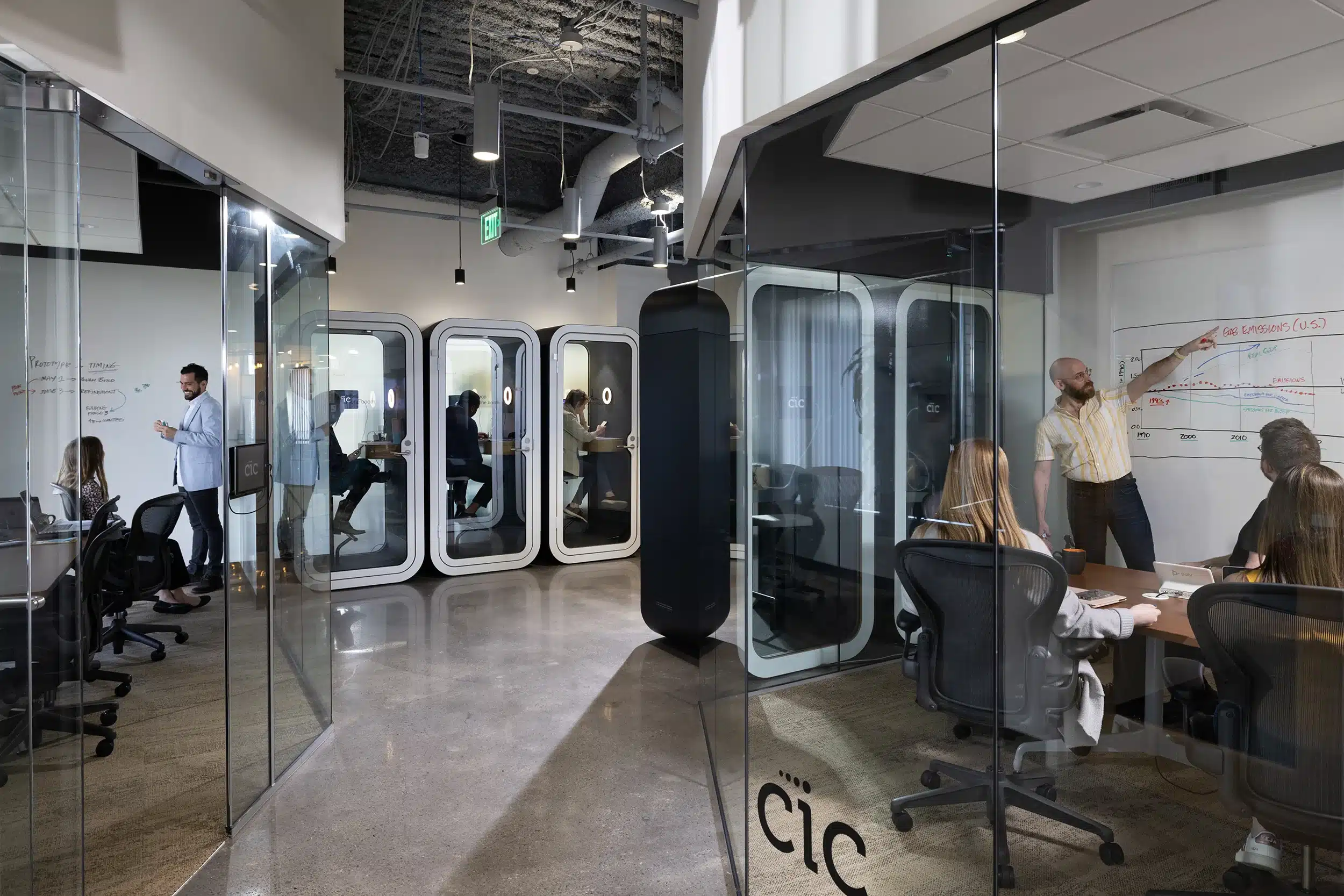
Our work spans the full lifecycle of an innovation campus.
The result is a campus that performs economically, culturally, and strategically over the long term.
Proven global impact
Results that compound over time.
More than
square feet operated globally
More than
companies have called CIC home
Average tenure of
vs. a 19-month industry benchmark
Incremental rent growth
above local market benchmarks
Anchored by leading universities, corporates, and governments, CIC campuses consistently drive economic growth, enhance asset relevance, and protect long-term value.
How CIC partnerships work?
A disciplined path from concept to operation.
CIC engages through a structured, phased process designed to reduce risk, build conviction,
and align stakeholders before capital is fully committed.
Initial stakeholder engagement and baseline financial modeling
Test Fit and financial assessment
Technical services, design support,
and pre-activation
Long-term operation under a management agreement
Each phase is designed to create clarity, momentum, and accountability on the path to launch.
Let’s explore what’s possible
Whether you are developing a single building, planning an innovation district, or shaping a national ecosystem strategy, CIC brings unmatched global experience and operating depth.
If you believe proximity, talent concentration, and disciplined execution are critical to success, we should talk.