What does coworking mean in 2026 and beyond?
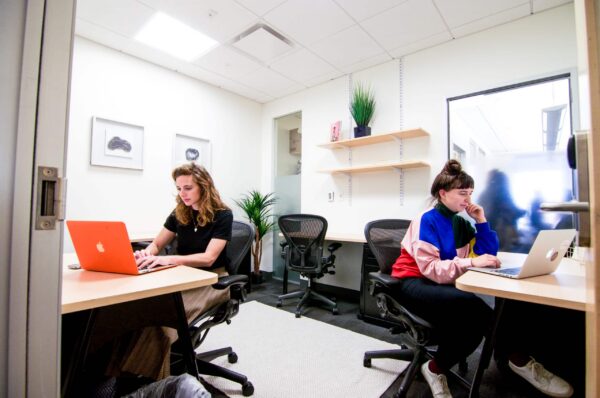
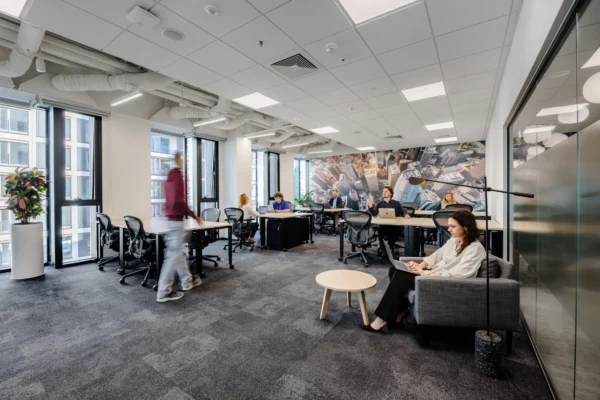
Coworking in 2026 is more than a desk in a shared office. It is a flexible workspace model that provides professionally managed space, amenities, and a built-in community for individuals and teams. Coworking gives people a reliable and well-equipped place to work, connect, focus, and collaborate without committing to a traditional long-term lease. It supports solo workers and freelancers as well as hybrid employees, distributed teams, and growing companies that need adaptable space.
Increasingly, enterprise organizations are adopting coworking as part of a broader workplace strategy. Companies use coworking for satellite offices, distributed teams, project-based work, market entry, and as a bridge to long-term real estate decisions. The global coworking market is valued at $20.96 billion and is expected to reach $58.37 billion by 2033, reflecting how strongly this model aligns with the future of work.
Below, we answer six common questions about coworking, flexible workspace, and making decisions about your organization’s workspace needs.
Coworking vs. flexible workspace: what’s the difference?
The terms coworking and flexible workspace are often used interchangeably. As the concept has grown in popularity, coworking has become a common catch-all phrase for many types of shared office environments. In reality, there is a clear distinction.
Coworking refers specifically to shared, open workspace where individuals and teams work alongside one another. This often includes access to community events, shared amenities, and short-term membership models. Coworking is one type of flexible workspace.
Flexible workspace is the broader category. It includes coworking as well as private offices, dedicated desks, office suites, labs, and custom workspace solutions. These spaces typically offer shared amenities such as kitchens, conference rooms, and community events. Flexible workspace allows companies and individuals to choose the level of privacy, control, and commitment that fits their needs. At CIC, for example, organizations can choose coworking, dedicated desks, private offices, or full suites that scale with their team and operational requirements.

Businesses often choose flexible workspaces for the same reason they choose coworking. Both models allow organizations to avoid long-term leases, reduce overhead, and access professionally managed environments that support productivity and collaboration. Spaces are typically furnished, maintained, and fully equipped, which reduces operational burden. Many providers, including CIC, also offer specialized resources and vibrant communities that support networking, innovation, and growth.
For clarity within this article, we will use the term coworking to refer broadly to both coworking and flexible workspace solutions. This reflects the way many people search for and talk about shared office environments today, while still acknowledging the distinctions between the models.
Who uses coworking spaces today?
Coworking space supports employees and organizations across industries, team sizes, and stages of growth, including:
- Individuals such as freelancers, researchers, independent contractors, remote workers, and professionals traveling for work
- Growing startups looking to building teams and routines without committing to a long-term lease
- Small to medium-sized businesses looking for a professional space with built-in amenities and the ability to scale
- Large organizations that need a satellite office to establish a presence in a specific market or support employees in other geographies
- Hybrid enterprise organizations that do not need dedicated desks for every employee, but still want centralized space for collaboration and team connection
- Multinational companies entering a new international market, supported by programs like CIC Japan Desk
What are the benefits of coworking workspace?
At its heart, coworking brings people together. When teams and solo professionals share space, they gain daily opportunities to learn from one another, spark ideas, and build meaningful relationships. A simple conversation in the kitchen can open the door to a new partnership or breakthrough.
The impact of coworking environments extends far beyond personal anecdotes. Research continues to show how working in close physical proximity fuels innovation, strengthens collaboration, and improves overall performance. When individuals feel connected to a community, they are more engaged, and organizations benefit from more creative and productive outcomes. Purposefully designed coworking spaces play an essential role in cultivating those connections.
CIC Providence’s offshore wind cluster is a strong example of how coworking space can accelerate progress across an entire sector. “Companies may come here when they can only afford one desk or temporary space, and then they get involved, network, and grow. And the industry is better for it, too,” shared Drew Carey, vice president of Americas for Venterra Group, a global offshore wind services company and CIC Providence alumnus.
Many coworking providers also curate programming and networking opportunities that help members meet peers, exchange insights, and develop new collaborations. “We’ve heard that some companies we support have met their business partner at CIC or through Venture Café events,” noted Minji Kwon, a researcher with the Korea Health Industry Development Institute (KHIDI).

KHIDI supports Korean healthcare companies as they expand internationally and they shared that the welcoming coworking community at CIC, along with mission-driven events, helps their companies make meaningful local connections and become more deeply integrated into the regional innovation ecosystem.
Is coworking a fit for companies increasing in-office days?
Absolutely. Even as more companies reinforce in-office work schedules, coworking remains a highly relevant and strategic option for 2026. The latest market data shows the coworking and flexible workspace sector is increasingly central to corporate real-estate strategies. According to a major 2025 industry analysis, more than 55% of global corporations now use flexible workspace solutions. Meanwhile, U.S. coworking alone continues to support thousands of locations and millions of square feet, reflecting robust demand from companies seeking adaptable environments for hybrid and in-person teams.
Looking ahead to 2026 and beyond, coworking spaces are evolving with new features, from niche and industry-specific environments, to upgraded amenities, wellness-oriented design, and flexible membership options, making them well-suited even for teams that are in-office more often. For many growing organizations, coworking provides an efficient, scalable alternative to traditional long-term leases. It offers flexibility to adjust space needs as headcount changes, and allows companies to combine the benefits of in-person collaboration with the agility and lower overhead of a shared workspace model.
In short, as corporate real-estate strategies shift and work models continue to evolve, coworking in 2026 stands as a viable, often smarter, long-term strategy.
What trends will shape coworking in 2026 and beyond?
In today’s business landscape, flexibility is essential for both employees and employers. Research from Slalom shows that 74 percent of employees would consider looking for a new job if required to be in the office three or more days a week. This shift continues to shape how organizations think about workspace and strengthens the case for coworking as a core part of modern work strategies.
At CIC, we have been watching these trends closely, and we are seeing a growing need for in-person, collaborative environments that support hybrid teams. Many companies are turning to coworking spaces to create more adaptable solutions that balance focused work with opportunities for connection.
As Jerzy Brodzikowski, GM of CIC Warsaw, shared in a recent blog post, “The world of work is changing rapidly, and companies need flexibility to match. At CIC Warsaw, we are seeing organizations rethink how they use their space. A 50-person company may only need desks for 10, but they may require 30 access cards. Flexibility is no longer optional; it is the expectation.”
We are also seeing coworking communities play a meaningful role in addressing rising workplace loneliness. Nearly one in five employees globally report feeling lonely at work, with fully remote workers most affected. Across CIC campuses, demand for event space and community programming continues to grow as members seek authentic opportunities to connect beyond their own teams.
What should teams look for in a coworking space in 2026?
Every organization is unique, but selecting the right coworking space should always reflect your business goals. As you evaluate options, think strategically about factors such as access to talent, proximity to others in your industry, and flexibility for future growth.
According to a report from Harvard Business Review Analytic Services, some of the most important factors reported by organizations that choose to use flexible workspace include:
- Location (66%)
- Cost (63%)
- Facilities/amenities (39%)
- Flexibility of the contract (38%)
Beyond the above, it helps to assess how well a coworking space supports connection and long-term success. Look for environments that actively foster community, offer relevant programming, and provide reliable technology that keeps your team working seamlessly. If your work requires specialized resources or industry-specific tools, ensure those are available as well. And remember that the overall workplace experience matters: thoughtful design, natural light, and a welcoming culture can all strengthen engagement and help your team do its best work.
Does CIC offer coworking?
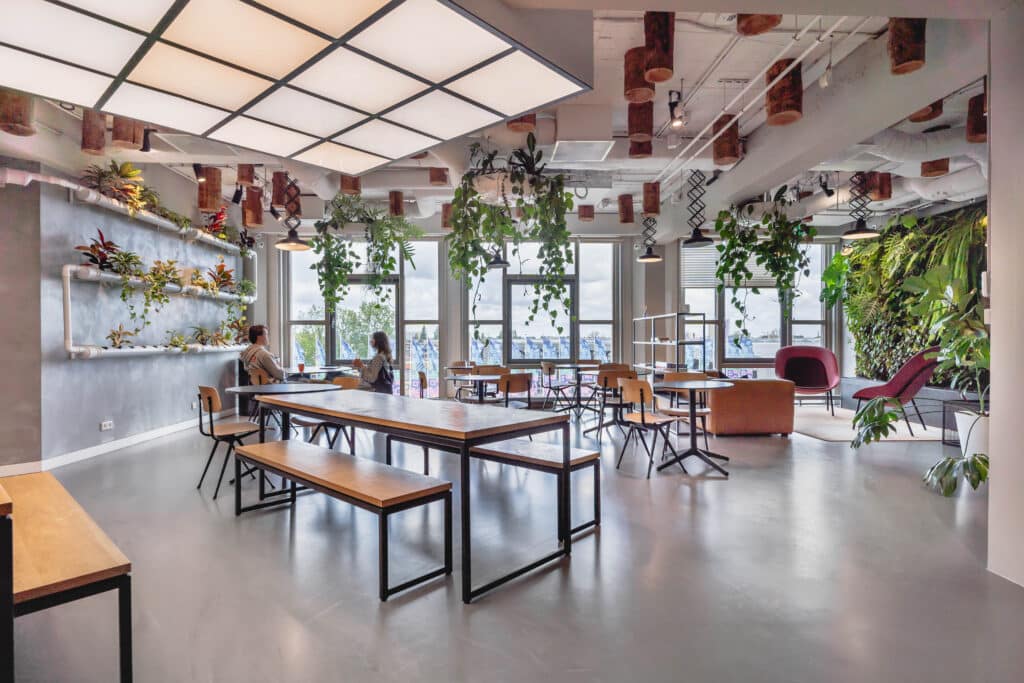
Yes. CIC is intentionally designed to provide companies and organizations with flexible office and lab space solutions that help innovators thrive and connect. With 1.5 million square feet of space across North America, Europe, and Asia, CIC innovation campuses offer a range of workspace options that support both in-person and hybrid teams. These include:
- Private office space and suites
- Designated desk space
- Coworking space
- Shared lab space
- Private lab space
- Event space
As a global leader in building and activating innovation clusters, CIC also delivers programming and events that strengthen collaboration and support vibrant innovation ecosystems.
Explore coworking and flexible workspace solutions for your team today.