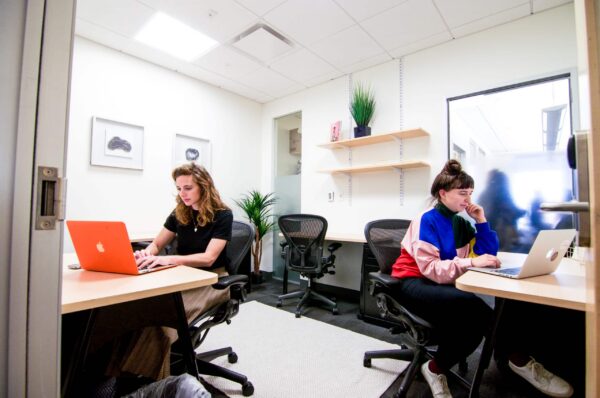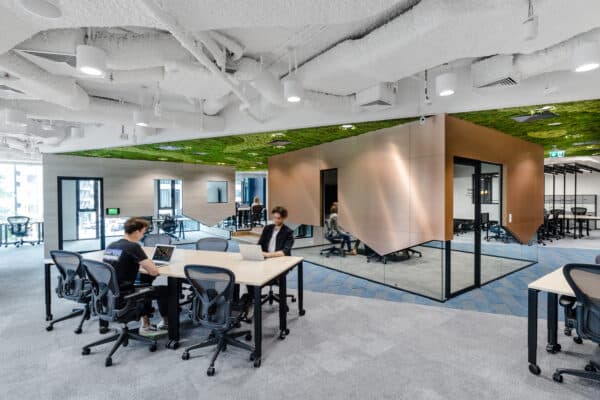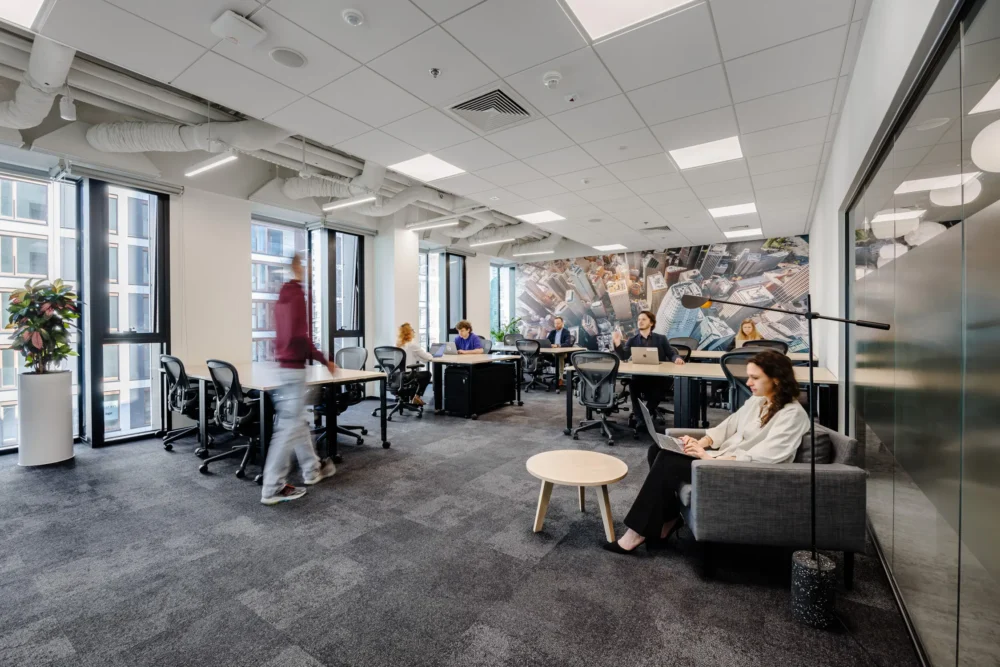
Flexible office space is an on-demand workspace model that allows organizations to access professional office environments without committing to long-term leases. Instead of committing to a fixed office for years, companies can choose workspace arrangements that match how their teams work today and adjust as needs evolve.
In this model, organizations can scale their workspace more easily. A company may expand its footprint as teams grow, reduce space during quieter periods, or reconfigure workspace layouts as projects change. This adaptability is one of the core flex space benefits, helping organizations stay responsive while managing real estate costs more effectively.
A flexible office space also supports a wide range of work styles. Teams can choose from private offices, coworking areas, and dedicated desks depending on the type of work they need to do. With shorter agreements, shared amenities, and thoughtfully designed environments, flexible offices help organizations align their workspace with the realities of modern work while maintaining the professional infrastructure teams need to succeed.
How do flexible workspaces differ from traditional real estate models?
The biggest difference between flexible workspace and traditional office leasing is adaptability. Traditional commercial leases often require commitments of five to ten years, which can lock organizations into a fixed footprint even as team size and work patterns change. Flexible workspace offers a more responsive model. With shorter agreements such as a month-to-month office lease or annual terms, organizations can scale their space up or down as needs evolve. This flexibility is especially valuable for startups, growing companies, and teams navigating hybrid work.
The financial structure also differs. Traditional leases typically require significant upfront capital expenditures (CapEx) for buildouts, furniture, and infrastructure. Flexible workspace shifts many of these costs into operational expenses (OpEx). Workspace, services, and amenities are bundled into a predictable monthly fee, reducing upfront investment and helping organizations align costs with the space they actually use.
Flexible workspaces are also designed for immediate use. Instead of spending months planning and building out an office, teams can move into a plug-and-play office equipped with furniture, high-speed internet, meeting rooms, and shared amenities already in place. This allows organizations to get to work quickly and avoid the time and complexity of traditional office buildouts.
Traditional Office Space vs. Flexible Workspace
Understanding the differences between these models is key to choosing a workspace that scales with your team. Use the following comparison of lease terms, costs, and setup times to determine which path best supports your operational goals.
| Feature | Traditional Office Space | Flexible Workspace |
| Term | Long-term lease commitments (typically 5-10 years) | Short-term, adaptable agreements (often month-to-month or annual) |
| Scalability | Difficult to adjust space during lease term | Easy to scale up or down as needs change |
| Upfront Costs | Significant CapEx for buildouts, furniture, and infrastructure | Minimal upfront costs as amenities are typically included |
| Setup Time | Months for design, construction, and furnishing | Immediate move-in with plug-and-play offices |
What are the different types of flexible office spaces?
Flexible office space comes in several forms, with the most common being coworking spaces, private offices, and virtual offices. Each option offers different levels of privacy, cost, and flexibility, allowing individuals and organizations ranging from freelancers to established corporate teams to choose a workspace that fits their needs.
Some organizations prioritize collaboration and shared environments, while others need dedicated workspace or simply a professional business presence without a full-time office. In many cases, private offices are offered as serviced offices, meaning the workspace provider manages the space, amenities, and day-to-day operations.
Understanding how these options differ helps organizations choose the flexible workspace model that best supports their team structure, work style, and growth plans.
Coworking Spaces vs. Serviced Offices: Key Differences Explained
When comparing coworking space vs. serviced offices, the primary difference comes down to privacy, workspace structure, and how teams interact within the environment.
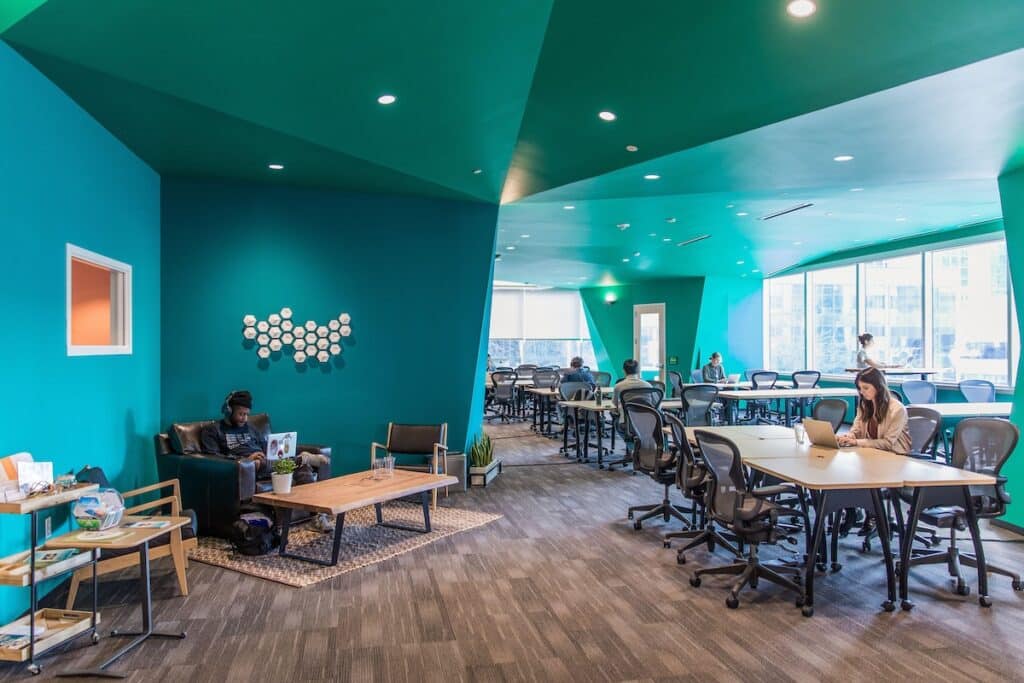
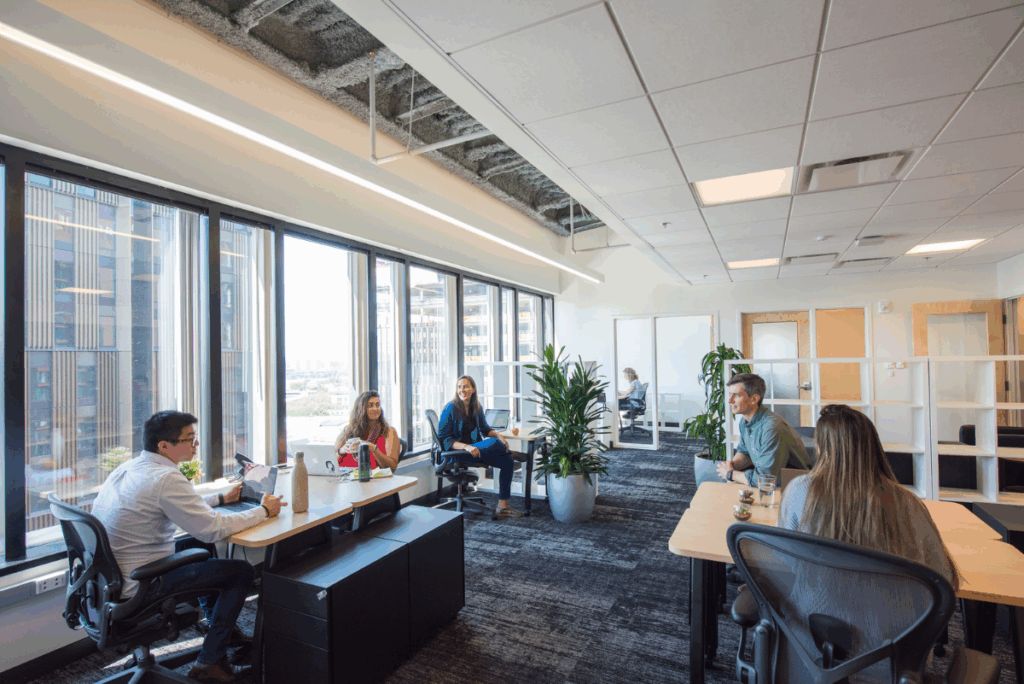
Coworking spaces are shared work environments where individuals and teams from different organizations work alongside one another. These spaces typically feature open seating, communal tables, and shared amenities such as lounges and meeting rooms. Coworking spaces are designed to encourage collaboration, networking, and knowledge sharing, which makes them especially appealing to freelancers, startups, and small teams.
Serviced offices, by contrast, provide dedicated workspace in the form of fully furnished private offices within a managed facility. A serviced office allows organizations to maintain privacy and focus while still benefiting from flexible terms and shared amenities such as reception services, meeting rooms, and common areas.
For many organizations evaluating coworking space vs. serviced offices, the choice ultimately depends on how much privacy, collaboration, and control their teams need in their day-to-day work environment.
Utilizing virtual office services for remote businesses
A virtual office is often the ideal solution for a remote-first business or companies expanding into new geographic markets. Instead of renting physical workspace, organizations can establish a professional presence in a desired location while their teams work remotely or in a distributed setup.
Virtual office services typically include a prestigious business address, mail handling, and call management, allowing companies to maintain a credible and professional image. By providing these services without requiring a physical office, virtual offices help businesses reduce costs and avoid the financial overhead associated with leasing and maintaining traditional workspace.
How does flexible workspace drive operational scalability and support hybrid work?
Flexible workspaces provide businesses with scalable office space that can expand or contract as organizational needs change. Instead of being locked into long-term leases, companies can quickly increase or reduce their footprint with minimal friction. This allows organizations to manage growth more effectively, whether they are hiring new employees, launching project teams, or entering new markets, while minimizing the financial risk associated with unused space.
This adaptability also makes flexible workspace a strong foundation for the hybrid office model. As employees split time between remote and in-office work, companies no longer need large offices filled with permanently assigned desks. Thoughtful workspace design plays an important role here. Flexible environments can incorporate a mix of private areas, shared work zones, and collaborative spaces that support different types of work throughout the day.
By aligning workspace with evolving workforce patterns, flexible offices support stronger business agility. Organizations can adapt their physical environment as priorities shift, helping teams stay productive while responding more quickly to changes in how and where work happens.
How Flexible Office Space at CIC Supports Innovation and Business Growth
At CIC, flexible office space extends beyond the traditional concept of flexible real estate. Each location is an innovation ecosystem where entrepreneurs, startups, investors, and established companies work alongside one another. By bringing diverse organizations into a shared environment, CIC creates opportunities for collaboration, knowledge exchange, and the kinds of connections that help new ideas move forward.
CIC’s flexible model also makes it easier for teams to operate and grow. Workspaces come equipped with plug and play infrastructure and all-access amenities that support day-to-day work. High speed internet, meeting rooms, shared lounges, and fully furnished offices are ready from day one, allowing organizations to focus on their priorities instead of managing office logistics or coordinating buildouts.
Just as important is the community that surrounds the workspace. CIC members are part of a dynamic professional network supported by events, programming, and opportunities to connect with peers across industries. By combining flexible workspace, all-access amenities, and a thriving innovation ecosystem, CIC creates an environment where organizations can focus on innovation while building the relationships that support long-term business growth.
Ready to experience CIC’s flexible office space for yourself? Book a tour here.